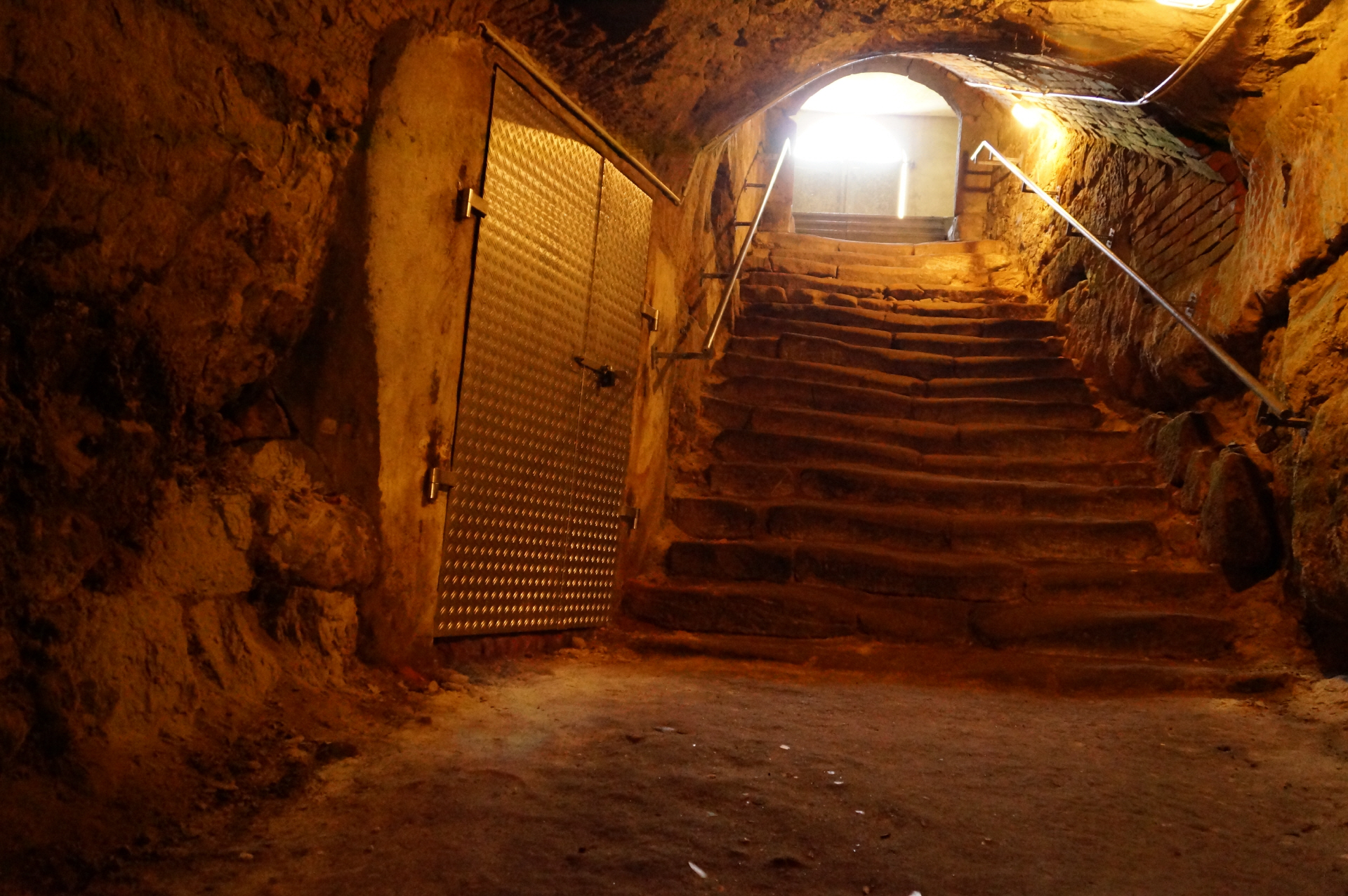
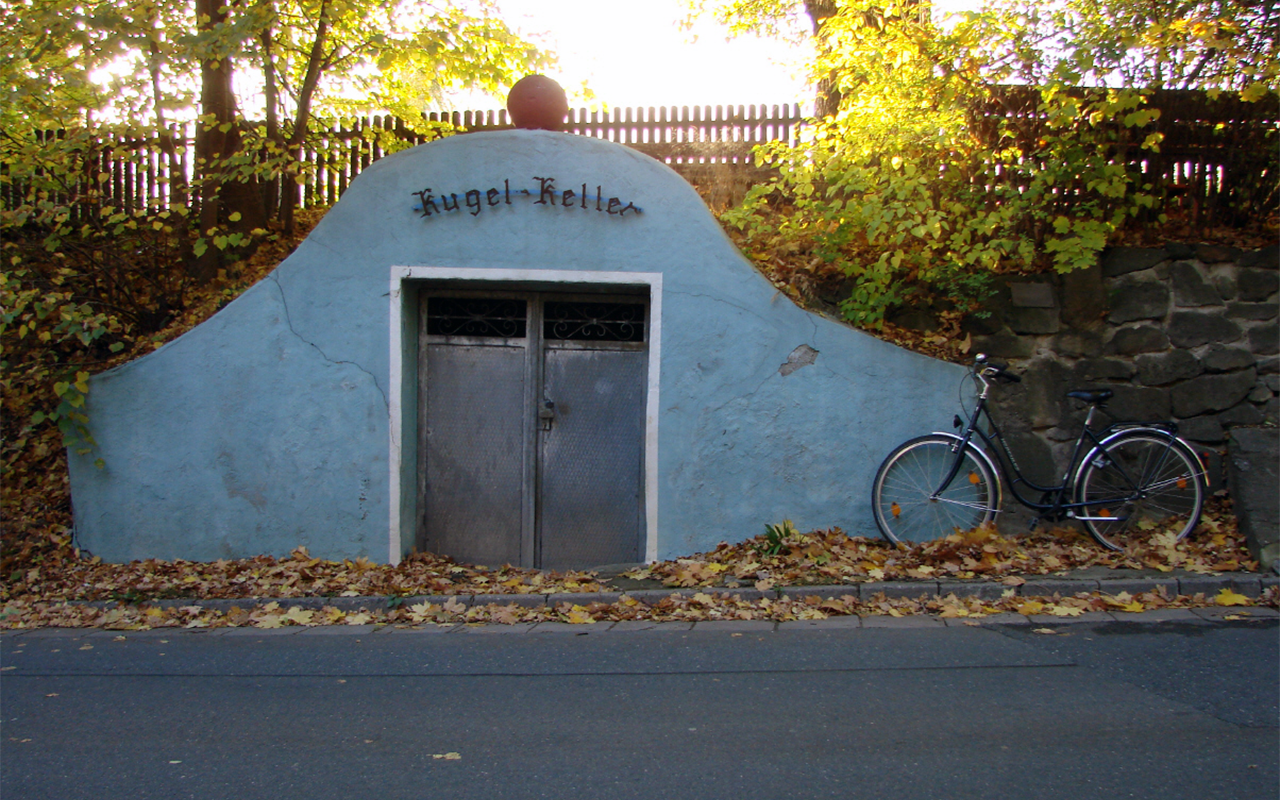
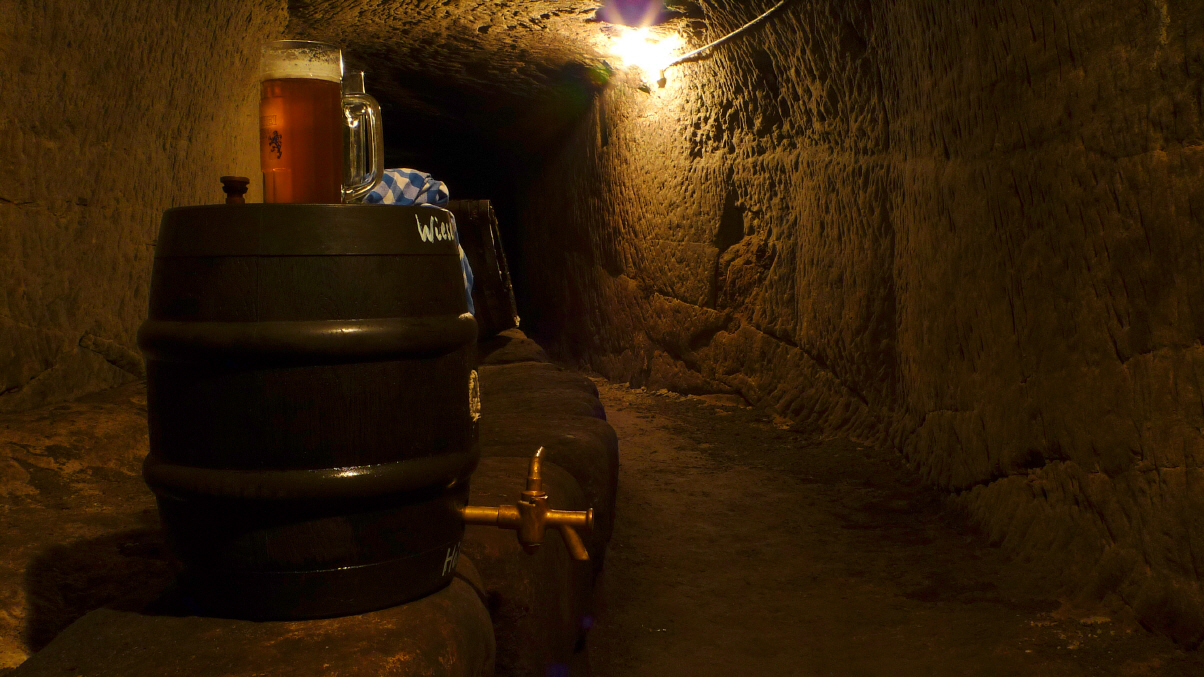
In the past, top-fermented beer had to be drunk quickly due to its short shelf life. This changed fundamentally with the invention of bottom-fermented beer, which was first mentioned in 1474 and could be stored for up to nine to ten months. However, cool storage was a problem, especially in summer, as beer would otherwise turn sour – for which brewers could be punished. To counteract this, King Ludwig I of Bavaria decreed that beer could only be brewed during the cold months between ‘Michaeli and Georgi’. To ensure that bottom-fermented beer was still available all year round, brewers built deep cellars or tunnels in rocks and slopes to store the beer in a cool place.
During the early stages of cellar construction, which began in the 17th century, it was mainly breweries that built cellars for the reasons mentioned above. However, during the 18th century, most of the small-scale home brewers also began to build storage cellars, which is particularly evident in Höchstadt a.d. Aisch.
In Erlangen, which once produced more beer than Kulmbach and Munich combined, people would gather on hot summer days in the cellar district, where up to 21,000 hectolitres of beer were stored. Around 1850, 16 breweries competed for the favour of just 3,000 residents. The growing competitive pressure led to ever new attractions such as bowling alleys, shooting galleries and music pavilions.
But the decline was not long in coming: in Bamberg, the number of summer cellars fell from 63 in 1840 to only 35 around 1900. The First World War and the Great Depression further reduced the number to 11 by 1934. Similar developments took place in the surrounding area.
Today, the region around Bamberg, Forchheim and Erlangen is almost unique in that it has been preserved as a summer cellar area. Pubs were built above the old sandstone cellars – hence the Franconian expression ‘auf den Keller gehen’ (go to the cellar). In Franconia, people don’t sit ‘in the beer garden’ but ‘in the cellar’, directly above the centuries-old tunnels where beer was once stored and cooled before Carl von Linde invented the refrigeration machine.