


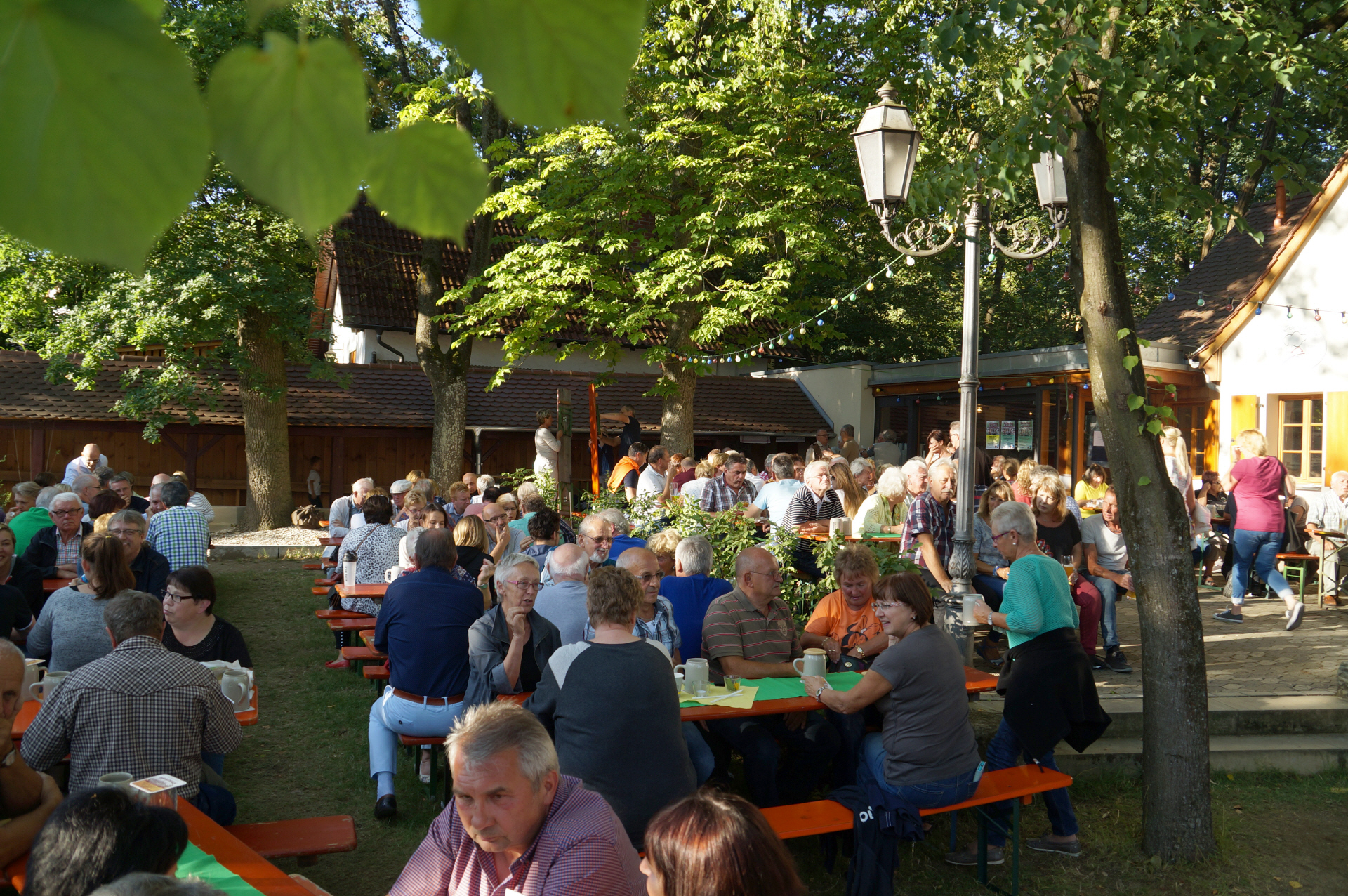
Cellars were originally used primarily as storage rooms. Since many of them were carved into the rock, they are called rock cellars or storage cellars. In Franconia, these cellars were traditionally used to store beer and are therefore colloquially referred to as beer cellars. However, the term is ambiguous, as it refers to both simple storage cellars and so-called summer cellars.
Summer cellars developed from storage cellars and differ from them in that their owners have the right to serve beer commercially. They were mainly operated during the summer months and were often run independently of a restaurant.
Location of the cellars:
The storage cellars were usually located outside the villages, often in small woods in exposed locations. They were often several kilometres away from the brewery in order to ensure better beer quality through cooler storage conditions. Nevertheless, they were usually no more than 3–4 km away from the settlements, so that the population could reach them on foot. Only cellars close to the villages later developed into summer cellars.
In the 19th century, around 1830, beer cellars were very popular – especially in Bamberg, where they were considered a social meeting place. There were even dedicated transport services (‘Zeiselwagen’) and a ‘Felsenkeller-Anfrage-Büro’ (rock cellar enquiry office).
Appearance:
The cellar entrances are often shaded by deciduous trees (especially lime and chestnut trees) to keep the temperature inside constant. Ideally, they are located on north or east-facing slopes to provide shade in summer and coolness in winter.
The entrance typically consists of a wooden gate in a stone arch, which in more recent times has often been replaced by iron doors.
In some cases, you have to descend stairs to reach the entrance, especially where roads have been raised.
In short:
Rock cellars were originally used to store beer in cool, shady rocks. In Franconia, many of these cellars developed into popular summer cellars – beer gardens run by restaurants outside the villages, which served as meeting places, especially in summer.
(D.Wennmacher, 1996)