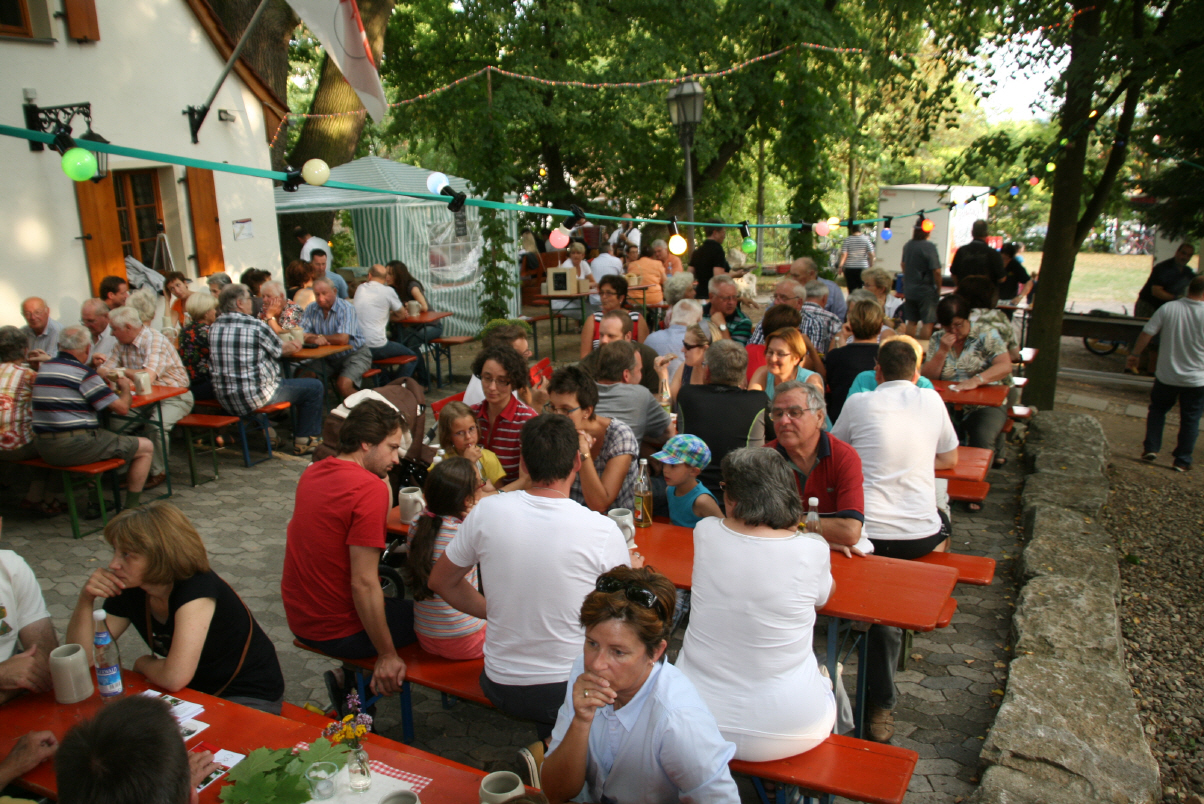
A beer garden is a special type of outdoor restaurant that originated in Bavaria, particularly in Munich, in the 19th century. Originally, the beer cellars along the Isar River were used to store bottom-fermented beer, which could only be brewed during the cold months. To keep the beer cool in summer, brewers stocked cellars with ice, planted chestnut trees for shade and scattered gravel on the ground.
Over time, tables and benches were set up, and the beer cellars developed into popular outdoor drinking establishments. A decree by King Ludwig I allowed the serving of beer but prohibited the sale of meals – guests were therefore allowed to bring their own food, which is still a hallmark of traditional beer gardens today.
Typical features of a beer garden are wooden seating, shady trees, gravel floors and a convivial atmosphere. People of all ages and social classes meet there in a relaxed atmosphere. Toasting, chatting and socialising characterise a visit to a beer garden, which often also has a playground for children.
In Franconia, the term ‘beer garden’ is sometimes still referred to as ‘beer cellar’, which is also reflected in traditional names such as Hofbräukeller or Augustinerkeller.