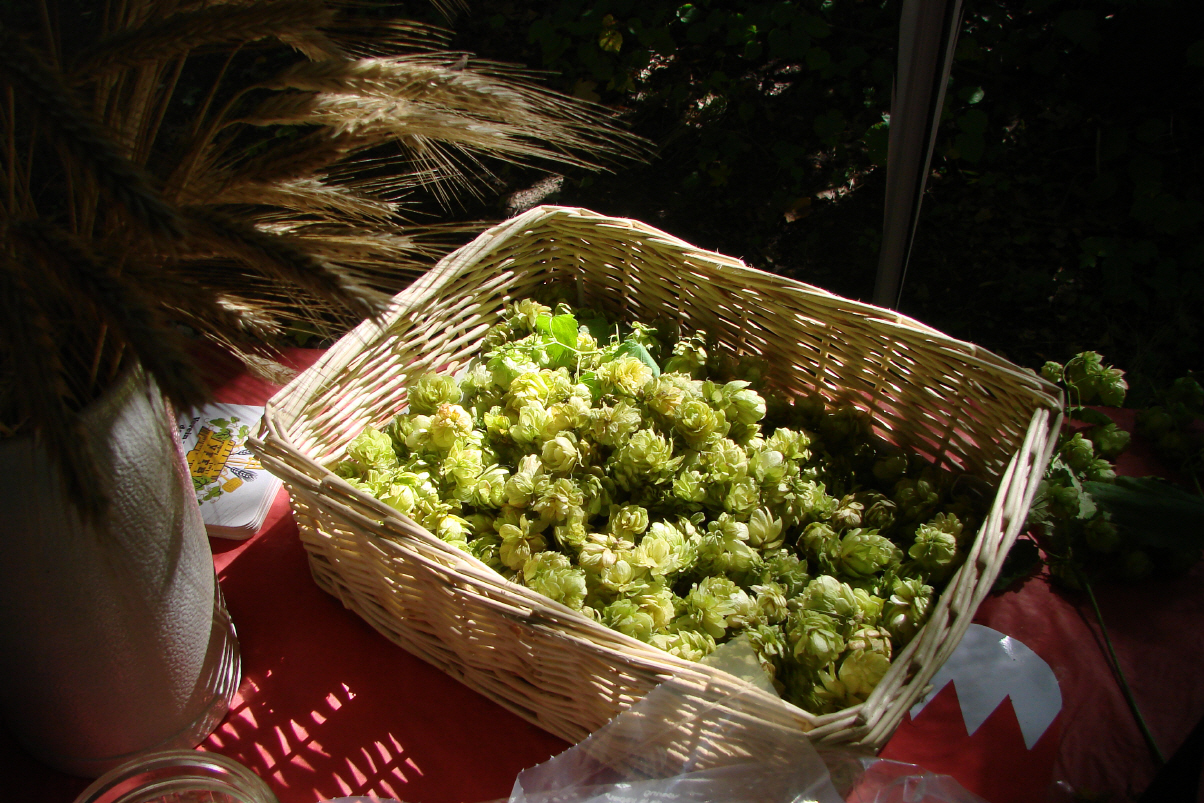
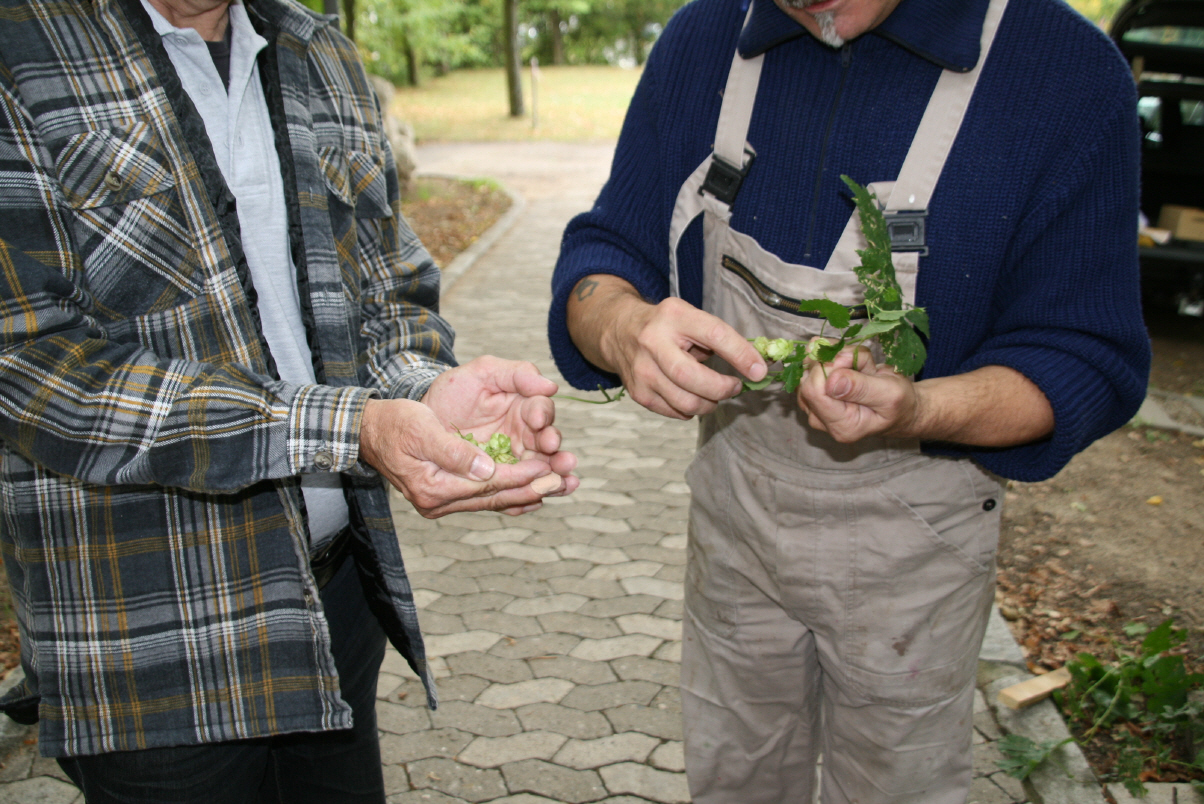
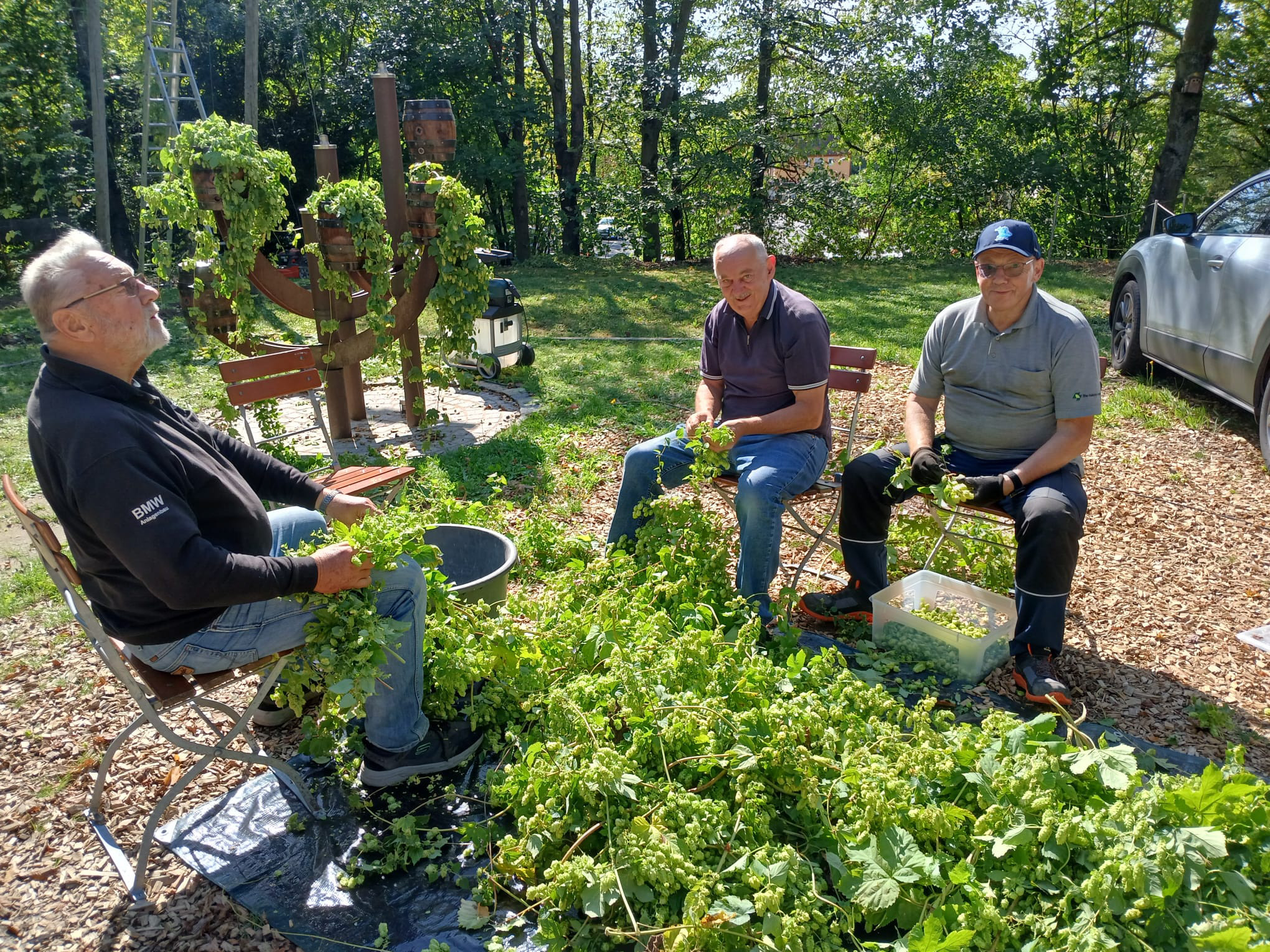
Hop cultivation in the Höchstadt area can be traced back to shortly after the Thirty Years’ War (around 1660/61), when residents purchased hop poles from the prince-bishop’s forests. However, regulated cultivation only began in 1763, when seedlings were introduced from Spalt and Reinhardshofen and the first hop gardens were laid out.
Prince-Bishop Adam Friedrich actively promoted hop cultivation:
he set prices,
rewarded a first harvest of 12 hundredweight with 30 talers,
and granted tax exemptions (tithing exemption) for newly planted hop fields.
In the 18th and 19th centuries, hop cultivation developed into an important economic sector. The price of hops fluctuated greatly – between 31 and 210 guilders per hundredweight (1791–1818), later 75–80 marks (1884). In 1905, the ‘Hop Growing Map of the Aisch and Zenn Valleys’ recorded 20 hop-growing communities in the district of Höchstadt with 523 hectares of cultivated land and a yield of 5,566 hundredweight. Höchstadt itself was one of the most important hop-growing areas in Bavaria with 135 hectares of hop gardens.
Hop picking was a social event:
songs were sung and stories told while the cones were being picked. At the end, there was coffee, cake, singing and dancing. A typical joke was the ‘Mäusgarn’ game, in which an unsuspecting person was tricked with a sack full of stones. The pickers received food, accommodation and 60–80 pfennigs per day in wages.
Hop cultivation was heavily dependent on the weather and threatened by disease – hence the saying:
‘The hop is a miserable drop.’
During the Third Reich (1935/36), the area under cultivation was drastically reduced – from 700 to just 4 hectares. The hop gardens had to be cleared, and with them, hop picking and all its customs disappeared completely from the Höchstadt countryside.
Von Anton Wölker, Sebastian Schmidt, Wolfgang Epple